
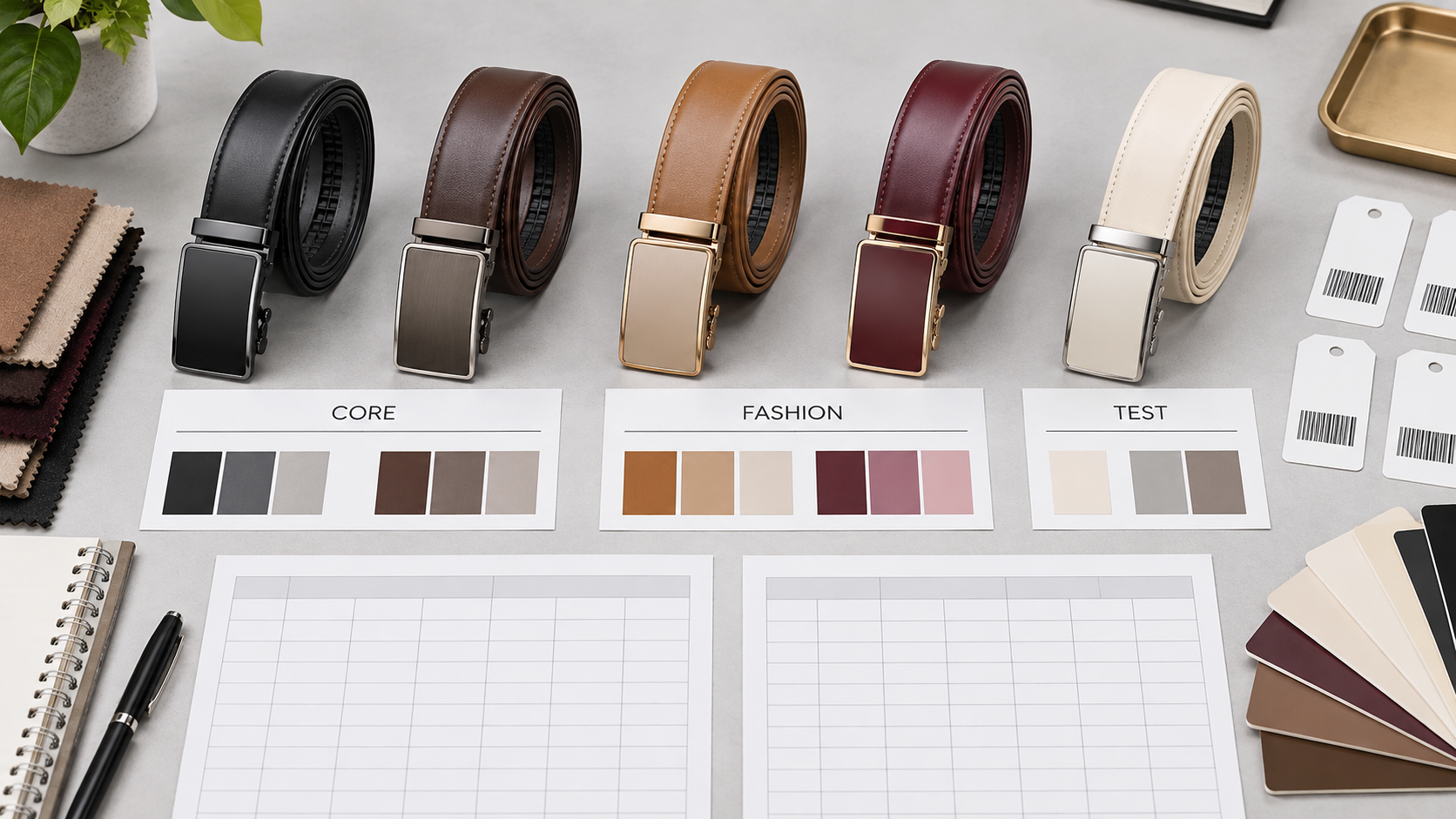
A best-selling women’s automatic belt is not a buckle shape any supplier can promise in advance. It is a style that reaches the right customer at the right price, then proves itself through sell-through, margin, acceptable returns, and reorders. For wholesale buyers, the practical goal is to build a focused assortment that can produce reliable evidence quickly.
At Wlapparel, we help brands, retailers, and distributors translate a range plan into materials, buckle options, colors, sizes, samples, private-label details, quality requirements, and packaging. Instead of calling an untested design a bestseller, we recommend combining dependable core products with controlled fashion bets and measurable test styles.
Define “Best-Selling” Before You Source
“Hot-selling” can mean high unit sales, fast sell-through, frequent reorder, strong gross margin, low returns, or broad performance across stores. Select the metric and time window before placing the order. A style can sell many units after heavy discounting while producing a weak commercial result; another may sell fewer units but deliver better margin and repeat demand.
| Metric | Buyer question |
|---|---|
| Sell-through | What share of received units sold in the agreed period? |
| Full-price mix | How much sold without markdown? |
| Gross margin | Did the style meet plan after landed costs? |
| Return rate | Were fit, function, or finish issues elevated? |
| Reorder rate | Did stores or accounts request replenishment? |
Build a Core–Fashion–Test Assortment
Core: the repeatable foundation
Core automatic belts should be easy to style and explain. Useful starting roles include a slim black belt with a clean gold- or silver-tone buckle, a dark brown or tan style with a restrained plaque buckle, a reversible neutral belt, and a gift-ready trim-to-fit option with clear instructions. Core does not have to look generic: proportion, edge color, hardware finish, logo execution, and packaging can make the product recognizably yours.
Fashion: visible seasonal newness
Fashion styles give buyers a reason to refresh the display. Current directions worth testing include sculptural and double-ring buckles, suede or suede-look surfaces, rich seasonal colors, antique finishes, and controlled western detailing. Tie every concept to a specific apparel story, target customer, and delivery window.
Test: small, measurable experiments
Use the test layer for a bolder color, finish, silhouette, or price point. Define a hypothesis before launch—for example, whether a burgundy suede-look automatic belt can outperform the same construction in taupe for fall boutique accounts. A clear question makes the result useful even if the style does not reorder.
Match the Belt to the Sales Channel
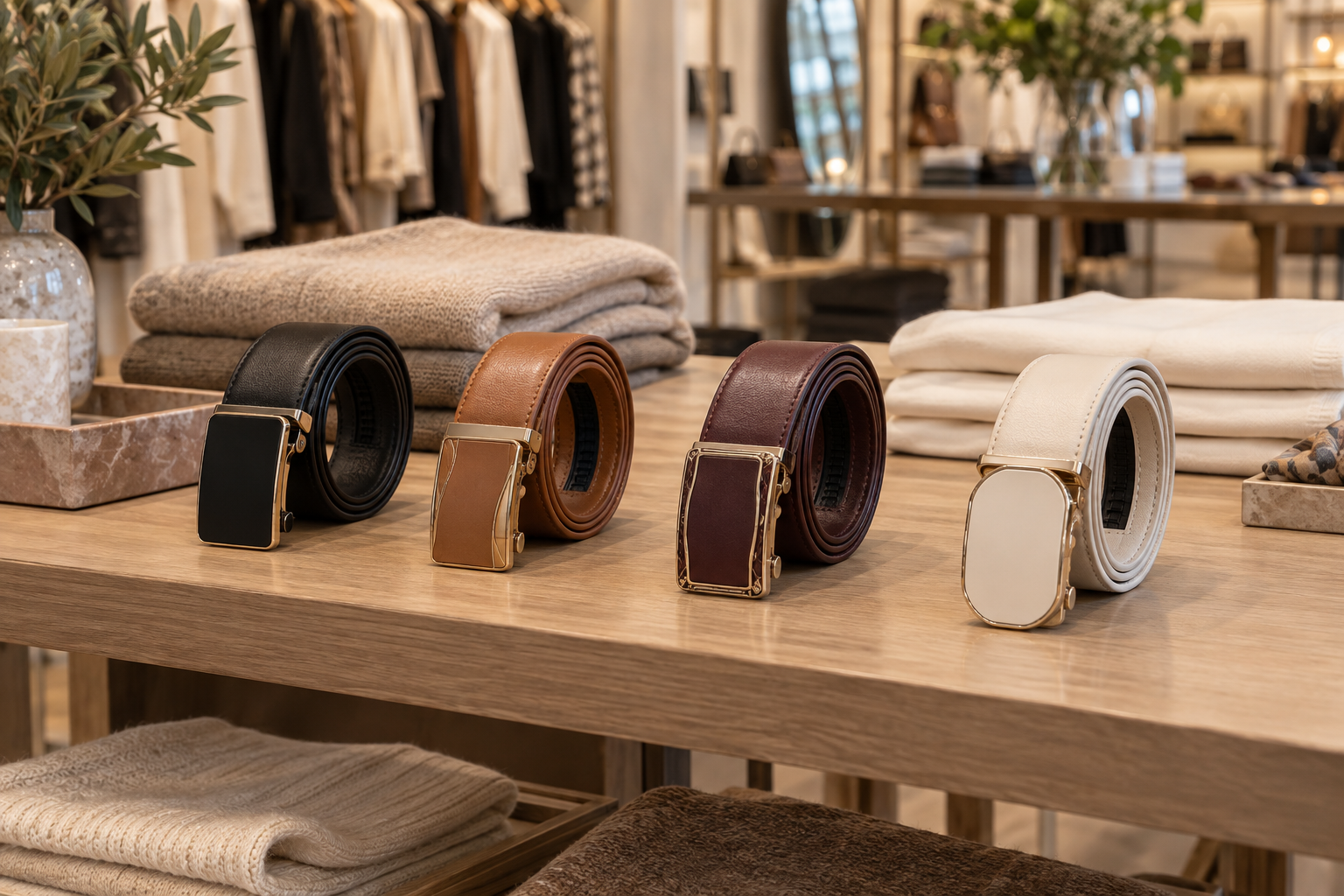
Fashion boutiques often benefit from a tight palette, one recognizable buckle family, and styling images that connect the belts with dresses, denim, knitwear, or outerwear. General apparel retailers usually need versatile colors, clear sizing, consistent replenishment data, and packaging that fits existing fixtures.
For gift shops and corporate gifting, prioritize ease of fit, understandable adjustment instructions, finish protection, and presentation. Ecommerce listings should explain the mechanism, composition, dimensions, size range, trimming method, and care. Photography should show the front, back, release lever, track, buckle scale, and the belt worn on a body or garment.
Control SKU Growth With a Range Matrix
An automatic belt collection can multiply quickly: styles × colors × finishes × sizes × packaging. Begin with product roles and add only variants that answer a real customer or merchandising need.
| Decision | Starting question |
|---|---|
| Style count | Does each style have a distinct role? |
| Colors | Which are core, seasonal, or experimental? |
| Hardware | Can a limited finish palette support the range? |
| Sizes | Which wearing positions and measurements are covered? |
| Packaging | Can one system serve multiple SKUs clearly? |
Share the proposed matrix before sampling. We can review whether strap width, thickness, buckle family, track, materials, and packaging choices create avoidable complexity.
Create a Clear Price Architecture
Good, better, and best tiers should be supported by visible and functional differences. An accessible program may use a controlled non-leather or leather construction, a compatible standard buckle, clean branding, and efficient packaging. A mid-tier belt can add an upgraded face material, more refined edge and stitching, reversible function, or a distinctive finish. A premium tier may use custom hardware, a specialized finish, carefully controlled leather construction, elevated packaging, or a more demanding inspection plan.
Request quotations against one fixed specification. Prices based on different materials, buckle constructions, tests, and packaging formats are not directly comparable.
Size Women’s Automatic Belts by Wearing Position
Women’s belts may sit at the natural waist, trouser waist, or hip. The same labeled size cannot be assumed to fit all three. Define the intended position, measurement basis, strap width and total length, usable adjustment range, fixed-size or trim-to-fit format, loose-end length, keeper position, and customer-facing size instructions.
Automatic adjustment can improve fit resolution, but it does not remove the need for a valid range. Test the complete belt on representative garments and users or fit forms selected by the buyer.
Approve Every Complete Construction
- Confirm material identity, grain, shade, backing, and thickness.
- Check buckle dimensions, finish, logo, lever, pawl, and clamp.
- Verify track position, usable adjustment range, and engagement.
- Review edge paint, stitching, bonding, alignment, and tip.
- Test repeated locking and release using the agreed method.
- Check slippage, pullout, track attachment, and visible damage.
- Approve labels, barcode, instructions, packaging, and carton assortment.
Our custom automatic ratchet belt and private-label manufacturing pages show the main development categories. Final options, commercial terms, and acceptance criteria are confirmed for each project.
Launch a Test That Produces Reorder Evidence
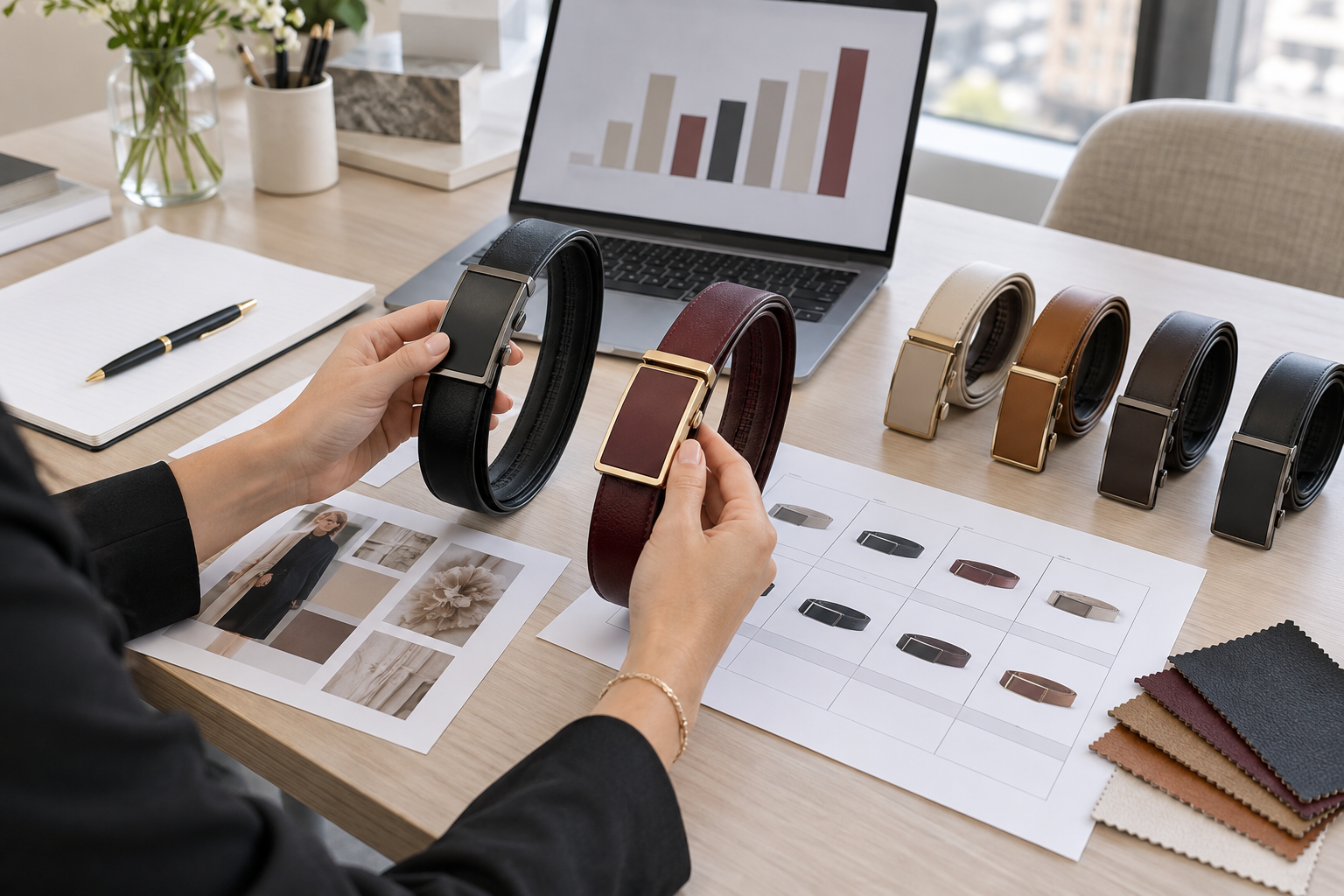
Assign a unique SKU to every style-color-size combination, record the received quantity and go-live date, keep price and promotion history, capture placement by store or channel, code returns by reason, and schedule a review date. When results arrive, separate product problems from merchandising problems. Low conversion may come from price, photography, traffic, styling, or unclear size information; high returns may point to construction or communication.
What Wlapparel Needs to Review Your Range
- customer profile, target market, and channels;
- core, fashion, and test product roles;
- reference images or samples;
- target price architecture;
- wearing position, widths, sizes, and adjustment ranges;
- material, color, buckle, finish, and logo direction;
- SKU and quantity matrix;
- packaging, labels, barcodes, and online information needs;
- test and inspection requirements;
- target date and approval process.
We will confirm the development path and product-specific commercial terms after reviewing the complete brief. To begin, send Wlapparel your assortment brief.
Frequently Asked Questions
What is the current best-selling women’s automatic belt?
There is no universal answer. Bestseller status depends on retailer, channel, market, price, period, and metric. Ask for the dataset behind any claim and validate it with your own test.
Should a first assortment focus on core or fashion colors?
Most ranges benefit from both, with more inventory assigned to proven core roles and smaller tests for seasonal colors. The balance should follow your customer and apparel palette.
When should a test style be reordered?
Use a predefined decision based on sell-through, margin, returns, weeks of supply, and lead time. Consider whether the result came from normal demand or a temporary promotion.